#CULTROUTE The Metropolitan Chambers - witnesses to the princely grandeur of Halych
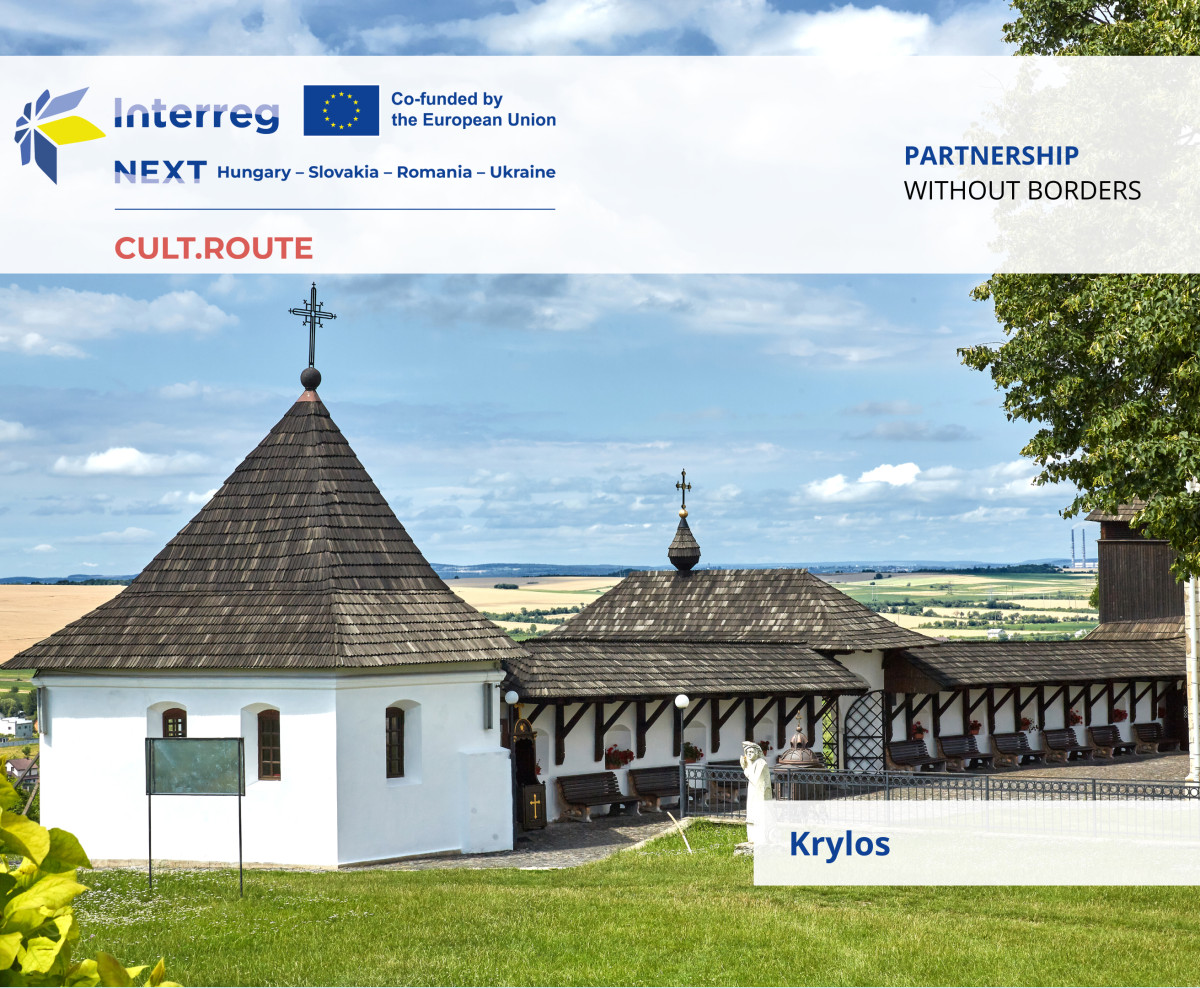
The Metropolitan Chambers of the XIX century in Krylos
The chambers of the Metropolitans of Halytskyi, Archbishops of Lviv, and Bishops of Kamianets, built in the early XIX century in the middle of Krylos Mountain – the ancient seat of Orthodox and later Greek Catholic bishops – still preserve within their walls the most mysterious pages of the history of the princely era. The fact is that the present village of Krylos, whose name comes from the Greek word klirós (clergy), was the real centre of chronicle Halych in the Middle Ages.
It was here on Krylos Mountain that the princely citadel was located – the main fortifications of the medieval capital, where behind high triple ramparts was the official residence of the rulers of the Halych land, next to the symbol of the spiritual greatness of Halych – the white-stone Assumption Cathedral. According to archaeological research, under the western wing of the present metropolitan chambers in the XII–XIII centuries, there was a monumental wooden multi-storey (up to three storeys) building, which researchers associate with the princely palace. The prince's palace was divided into four parts, and its central (largest) hall was clearly a ceremonial hall, where solemn receptions of ambassadors were held, important state issues were decided, and the prince's chancellery worked. The floor, and possibly the walls of the building, were decorated with relief ceramic tiles depicting mythical creatures – griffins and sirens. A porch with an entrance staircase was also attached to the palace structure. Next to it were utility buildings – a kitchen, stables and armouries.
During the golden age of Halych in the mid-XII – mid-XIII centuries, famous rulers of medieval Europe ruled and resided here. For example, during the reign of Halych Prince Yaroslav Volodymyrovych Osmomysl, the future Byzantine Emperor Andronikos Komnenos sought refuge here from political exile. Noble envoys from the princes of Kyiv, Chernihiv, and Volyn, diplomatic delegations from Polish rulers, Hungarian kings, Bulgarian kings, Byzantine and German emperors, Roman popes, and Constantinople patriarchs came here. At the beginning of the XIII century, the young royal couple of Halychyna, Koloman and Salomea, lived in the princely chambers for some time. The King of Rus, Danylo Romanovych, established his power here several times. It was King Danylo who, after the Mongol invasion in the mid-XIII century, moved the capital of his state to Kholm, thus effectively depriving Halych of further political growth.
Since the secular rulers left Halych, the princely chambers were apparently occupied by representatives of the higher clergy – bishops, and from 1301, metropolitans and their deputies. This situation eventually led to the relocation of the administrative centre of Halych closer to the Dniester River, where the commercial life of the ancient capital had been thriving since princely times. Thus, the old Halych fortress acquired the religious name of Krylos – the seat of the cathedral clergy. During the XIV-XVIII centuries, the residence of the clergy in Krylos was repeatedly rebuilt and expanded. Bishop Gedeon Balaban contributed most to this process in the second half of the XVI century, completing the demolition of the old XII-century cathedral and building a new cathedral nearby. His efforts also led to the construction of the stone towers of the defensive monastery, the opening of a printing house, and the obvious reconstruction of the chambers themselves. Similar large-scale construction work was carried out a second time by Bishop Joseph Shumlyansky after the destruction caused by the Turks and Tatars in 1676.
The current stone chambers were built in the early XIX century during the reign of Metropolitan Antin Angelovich, using hewn stone blocks from the nearby monastery church of St. Prophet Elijah, which dated back to the XII–XVIII centuries. The Krylos residence was often visited by Greek Catholic metropolitans, including Silvestr Sembratovych and Andrei Sheptytskyi. The Sisters of Servants, who cared for local orphaned children, also operated at the chambers. During World War I, the Metropolitan Chambers and the Assumption Church suffered significant damage, but in the 1920s, thanks to the efforts of Metropolitan Andrei Sheptytskyi, the historic buildings were restored. The name of the metropolitan is also associated with one of the greatest sensations in Ukrainian archaeology – the discovery of the foundations of the XII-century Assumption Cathedral by Dr. Yaroslav Pasternak near the existing chambers. Andrei Sheptytskyi’s generous financial donations to archaeology and his desire to create a museum based on the discovered monuments practically determined the future fate of the Krylos residence.
However, the initiatives of Metropolitan Andrei and others were interrupted by World War II. The issue of organising a museum in Krylos was revisited during the Soviet period, with the corresponding ideological context. In 1958, the old residence was redesigned with the addition of a new wing, and in 1960, a branch of the then Stanislav Regional Local History Museum was officially opened in the village of Krylos.
Since 1994, the ancient Metropolitan Chambers have housed the Museum of the History of Halych of the National Reserve “Ancient Halych”, where artefacts from different periods are exhibited, vividly illustrating the past of the Halych region.
This publication has been produced with the financial assistance of the European Union. Its contents are the sole responsibility of the Executive Committee of Ivano-Frankivsk City Council and do not necessarily reflect the views of the European Union.
#InterregNEXT #interregnexthuskroua #InterregnextHUSKROUA #CrossBorderCooperation #Interreg #HUSKROUA