#Daphne Energy Efficiency and Renewable Energy for Greener Healthcare in Szczecin
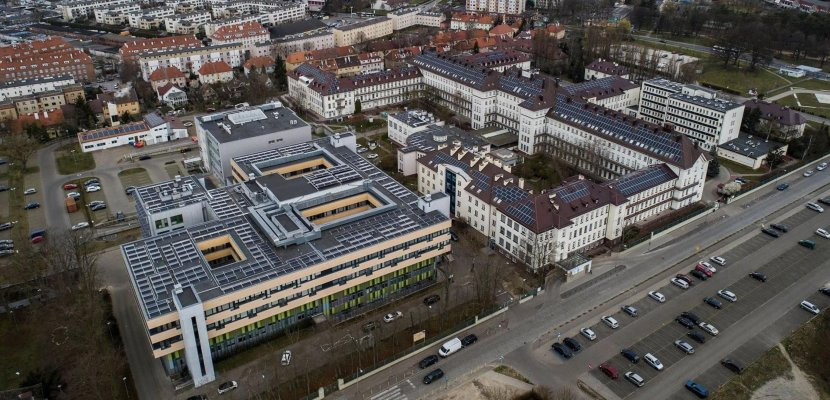
Within the DAPHNE – Decarbonising Healthcare in EU Regions project, implemented under the Interreg Europe programme, we continue to showcase the best practices of our partners. This time, we highlight an inspiring example from Poland, where the University Clinical Hospital No. 1 of PUM in Szczecin is implementing innovative solutions to create a more sustainable and energy-efficient healthcare system.
As one of the largest healthcare institutions in the region, the hospital serves thousands of patients every year. To reduce its environmental impact, the institution actively focuses on lowering energy consumption, reducing CO₂ emissions, and integrating renewable energy sources.
Special attention has been given to modernising the hospital’s energy infrastructure and improving the energy efficiency of its buildings. These measures not only help reduce operational energy costs, but also create more comfortable conditions for both patients and medical staff.
Importantly, the hospital is also part of the Szczecin Green Energy Cluster, an initiative bringing together universities, hospitals, and local institutions around a shared goal – the development of clean energy and the achievement of climate objectives. This collaborative approach demonstrates how essential cooperation between healthcare institutions, academia, and local communities is for building a sustainable healthcare system.
Beyond the environmental benefits, these solutions strengthen the hospital’s energy security and improve its resilience to current and future challenges. It is another strong example of how healthcare can combine innovation, care for people, and responsibility towards the environmen
Learn more about this good practice:
https://www.interregeurope.eu/good-practices/energy-efficiency-res-for-greener-healthcare-university-clinical-hospital-no1-of-pum-in-szczecin
“DAPHNE - Decarbonizing Healthcare in the EU Regions” project is implemented under the Interreg Europe Program, funded by the European Union. The contents of this publication are the sole responsibility of the author. The management of the Interreg Europe Program is not responsible for any information contained in this publication.